
Shipping Container Delivery: What Buyers Need to Know (2026)
Buying a shipping container is only part of the process. Before your container arrives, you need to make sure your property is prepared, the delivery vehicle can access the location, and there is enough space to safely unload and position the container.
Whether you’re purchasing a 10ft, 20ft, 30ft, 40ft, or 45ft container, planning delivery in advance can help prevent delays and unexpected problems.
If you’re still deciding which size is appropriate for your project, read our How to Choose the Right Shipping Container for Your Needs (2026) guide before ordering.
This guide explains what buyers should know about shipping container delivery, from preparation and access to unloading and final placement.
What Is Shipping Container Delivery?
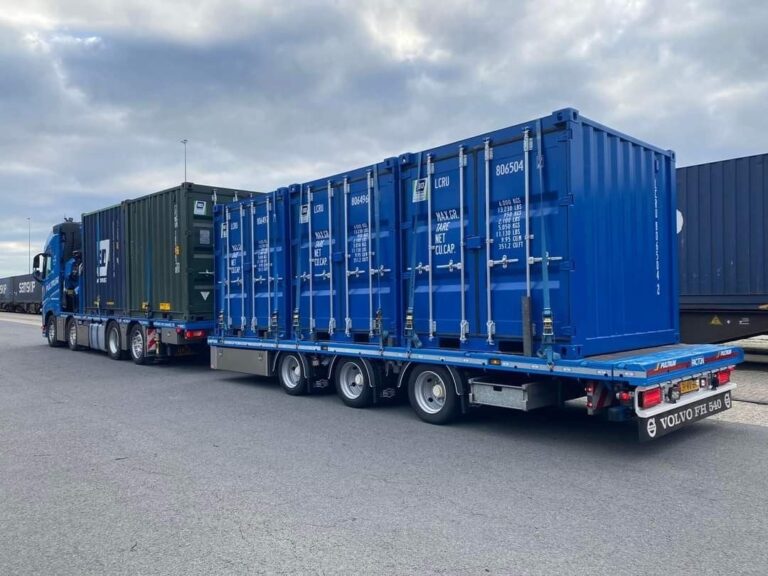
Shipping container delivery is the process of transporting a container from the seller or storage yard to the buyer’s property and unloading it at the desired location.
Unlike delivering a small package, transporting a shipping container requires specialized equipment and careful planning.
The delivery process can involve:
- Loading the container onto a delivery vehicle
- Transporting it to the destination
- Positioning the delivery vehicle
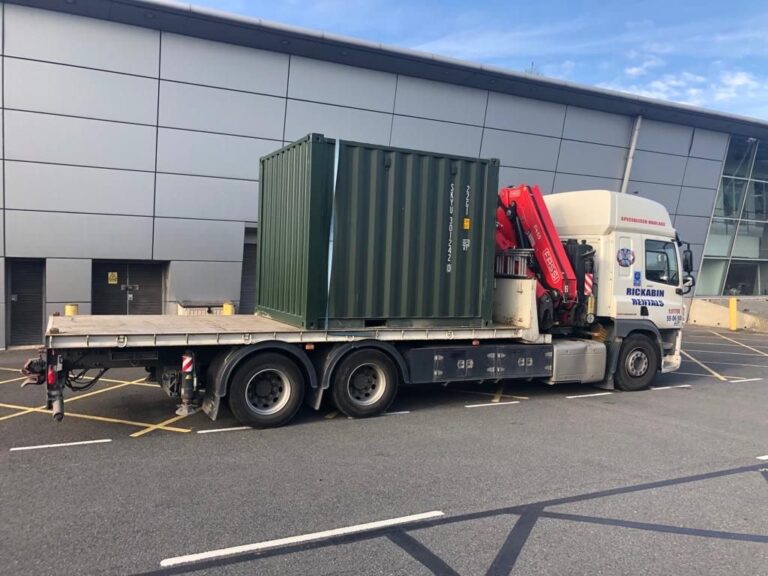
- Unloading the container
- Placing the container in the desired location
- Checking that the container is positioned correctly
The exact unloading method depends on the container size, delivery equipment, property layout, and site conditions.
What Should You Do Before Your Container Arrives?
One of the biggest mistakes buyers make is purchasing a container without preparing the delivery site.
Before delivery, inspect your property carefully.
You should consider:
- Entrance width
- Driveway condition
- Turning space
- Overhead clearance
- Ground conditions
- Placement area
- Nearby buildings
- Fences
- Trees
- Utility lines
- Other obstacles
The container may fit perfectly in the intended location but still be impossible to deliver if the truck cannot reach the site.
How Much Space Do You Need for Delivery?
The required space depends on the container size and delivery equipment being used.
A 10ft container generally requires less space than a 40ft or 45ft container, but you still need enough room for the delivery vehicle to access and position the unit.
Larger containers require considerably more planning.
For example, before ordering a 40ft Container, make sure the delivery route can accommodate both the container and the delivery vehicle.
The same applies to 45ft Containers, which require additional planning because of their greater length.
What Size Container Should You Order?
Delivery planning should begin when you select your container size.
10ft Containers
A 10ft Container can be useful for properties where space is limited.
It can provide secure storage without taking up as much room as a longer container.
20ft Containers
A 20ft Container offers a useful balance between storage capacity and overall footprint.
It’s suitable for many residential, commercial, construction, and storage applications.
30ft Containers
A 30ft Container provides an intermediate option for buyers who need more capacity than a 20ft container but don’t necessarily need a 40ft unit.
40ft Containers
A 40ft Container provides substantially more storage capacity but requires more room for delivery and placement.
45ft Containers
A 45ft Container provides additional length for buyers who need maximum storage capacity.
Before ordering, carefully evaluate the access route and intended placement area.
How Is a Shipping Container Unloaded?
The unloading process varies depending on the equipment and delivery arrangement.
Some deliveries use equipment that allows the container to be unloaded from the delivery vehicle and positioned at the destination.
The driver may need to maneuver into a particular position to safely unload the container.
This is why the delivery site must be clear before the truck arrives.
Never assume that the driver will be able to work around obstacles after arriving.
If the site isn’t accessible, delivery may be delayed or additional arrangements may be necessary.
What Makes a Property Difficult to Access?
Several factors can make container delivery challenging.
Narrow Entrances
A narrow driveway or gate can prevent the delivery vehicle from entering.
Measure the entrance rather than estimating its width.
Low-Hanging Trees
Branches can interfere with the truck or container.
Trim problematic branches before delivery.
Utility Lines
Overhead power lines and other utilities can create serious clearance issues.
Make sure the delivery route is free of hazards.
Sharp Turns
A container delivery vehicle may need significant space to maneuver.
A narrow road followed by a sharp turn can create difficulties.
Soft Ground
Wet, muddy, or unstable ground can make it difficult for heavy delivery equipment to access the property.
Where Should You Place a Shipping Container?
The best location depends on your intended use and property.
A good placement area should generally be:
- Stable
- Accessible
- Relatively level
- Free of major obstacles
- Suitable for the container’s weight
- Accessible to the container doors
You should also think about how you’ll use the container after delivery.
For example, don’t place the container somewhere that makes it difficult to open the doors or retrieve stored items.
Does a Shipping Container Need a Foundation?
Not every storage application requires the same foundation solution.
However, the container should generally be placed on a stable, properly prepared surface that supports its weight and helps prevent excessive settling.
Depending on the property and intended use, buyers may consider options such as:
- Concrete
- Gravel
- Concrete blocks
- Railroad ties
- Other suitable support systems
The appropriate solution depends on the site, container, local conditions, and intended use.
We’ll cover container foundations in greater detail in a future supporting article.
Why Level Placement Matters
A container doesn’t necessarily need to sit on a perfectly finished concrete slab, but the supporting surface should be appropriately prepared.
Uneven or unstable ground can contribute to:
- Door alignment problems
- Difficulty opening doors
- Uneven loading
- Water drainage problems
- Container movement or settling
A properly prepared site can make the container easier to use and maintain.
Should the Container Doors Face the House or Driveway?
Think about accessibility before delivery.
If you’re storing equipment or inventory that you’ll frequently access, positioning the doors toward a convenient access area can make everyday use much easier.
Consider:
- Where vehicles will park
- Where people will walk
- How you’ll move items in and out
- Whether the doors can open fully
- Whether future construction could block access
A few minutes of planning before delivery can prevent years of inconvenience.
What About High Cube Containers?
If you’re considering a High Cube Container, remember that delivery planning isn’t only about length and width.
High Cube containers provide additional height, so overhead clearance should also be considered.
Look for potential obstacles such as:
- Low branches
- Utility lines
- Roof overhangs
- Bridges
- Low gates
- Other overhead structures
Make sure the delivery route can accommodate the container and equipment being used.
Delivery Planning for Used Containers
If you’re buying a Used Shipping Container, delivery planning remains just as important.
A used container may have cosmetic wear, dents, or surface rust, but the delivery process still requires adequate access and a suitable placement area.
Before ordering, make sure you know:
- The container dimensions
- The delivery method
- The expected placement area
- Site access requirements
- Any restrictions on your property
What Happens If the Truck Can’t Access Your Property?
This is one of the most important things to consider before purchasing.
If the delivery vehicle cannot safely access the property, the driver may not be able to complete the delivery.
Potential problems include:
- Narrow roads
- Blocked entrances
- Low clearance
- Soft ground
- Insufficient turning space
- Obstructions
- Unsafe unloading conditions
That’s why you should discuss difficult access conditions with the seller before scheduling delivery.
If you’re unsure about your property, take photographs and measurements of the entrance, driveway, intended placement area, and surrounding obstacles.
How to Prepare Your Property for Container Delivery
Use this checklist before delivery day:
Property Preparation Checklist
☐ Measure the entrance
☐ Check driveway width
☐ Check overhead clearance
☐ Remove branches and obstacles
☐ Confirm the ground is stable
☐ Clear the placement area
☐ Confirm sufficient turning space
☐ Decide where the doors should face
☐ Prepare the supporting surface
☐ Keep the delivery route clear
☐ Inform the driver of any special access conditions
Completing these steps ahead of time can make delivery significantly smoother.
Shipping Container Delivery and Different Sizes
The larger the container, the more important delivery planning becomes.
A compact 10ft container can be easier to position on a smaller property.
A 20ft container is still relatively manageable for many locations.
A 30ft, 40ft, or 45ft container requires more careful planning because of the additional length.
This doesn’t mean larger containers cannot be delivered to residential properties. It simply means you should evaluate access before purchasing.
How Delivery Relates to Your Container Choice
Delivery shouldn’t be an afterthought.
When deciding between a 20ft and 40ft container, for example, you’re not only comparing storage capacity.
You’re also comparing:
- Required placement space
- Delivery access
- Turning requirements
- Ground preparation
- Overall footprint
That’s why our Shipping Container Sizes Explained: 10ft, 20ft, 30ft, 40ft & 45ft article is a useful companion to this guide.
It helps you understand the size differences before you arrange delivery.
Frequently Asked Questions
How is a shipping container delivered?
A shipping container is transported using specialized delivery equipment and unloaded at the buyer’s prepared location. The exact method depends on the equipment, container size, and property.
Does my property need a large driveway?
Not necessarily, but the delivery vehicle needs sufficient access to safely reach and unload the container.
Can a shipping container be delivered to a residential property?
Yes, shipping containers can be used on many residential properties, subject to local rules, site conditions, and delivery access.
Does the ground need to be perfectly flat?
The placement area should be suitably stable and reasonably level. Proper preparation helps reduce settling and potential door-alignment issues.
Can I move a shipping container after delivery?
Moving a container after placement can require specialized equipment. It’s generally better to determine the correct location before delivery.
Should I prepare the site before ordering?
Yes. Ideally, evaluate the delivery route and prepare the placement area before scheduling delivery.
Final Thoughts
Successful shipping container delivery starts before the container leaves the seller’s location.
Choosing the right size, measuring your access route, preparing the ground, removing obstacles, and deciding where the container should be placed can prevent many common delivery problems.
Whether you’re purchasing a 10ft, 20ft, 30ft, 40ft, 45ft, or High Cube container, take time to evaluate your property before delivery day.
If you’re still deciding which container is right for you, start with How to Choose the Right Shipping Container for Your Needs (2026), then compare the available Shipping Containers based on your space, intended use, and delivery requirements.
Explore Shipping Containers to compare available options.
For more information about international shipping container standards, visit the International Maritime Organization (IMO)