Shipping Container Sizes Explained: 10ft, 20ft, 30ft, 40ft & 45ft
Choosing the right shipping container size is one of the most important decisions to make before purchasing a container. The right size depends on how much space you need, what you plan to store, the available space on your property and your delivery requirements.
Shipping containers are available in several standard and specialized sizes, including 10ft, 20ft, 30ft, 40ft and 45ft options. High Cube containers also provide additional interior height for buyers who need more vertical storage space.
If you’re still deciding which option is right for your project, our guide on How to Choose the Right Shipping Container for Your Needs (2026) can help you compare your requirements before selecting a size.
In this guide, we’ll explain the most common shipping container sizes and what each one is best suited for.
Understanding Shipping Container Sizes
Shipping container dimensions are generally described by their length, width and height.
A standard container is typically around 8 feet wide, while the length varies depending on the model. The most common options include:
- 10ft shipping containers
- 20ft shipping containers
- 30ft shipping containers
- 40ft shipping containers
- 45ft shipping containers
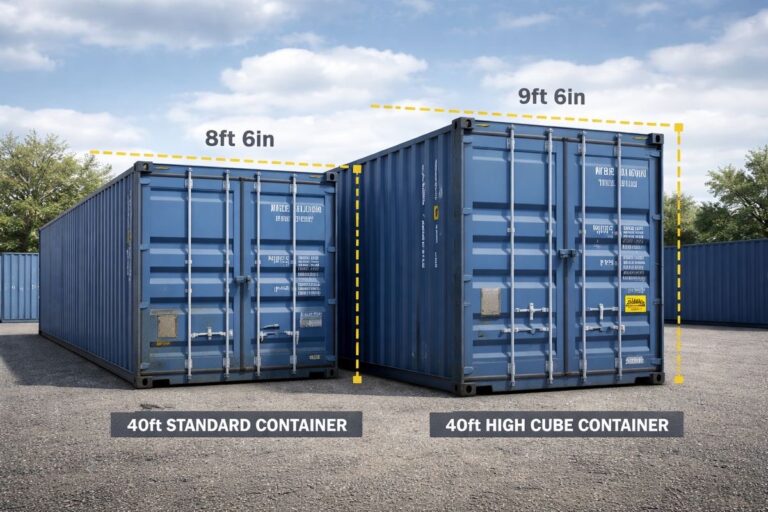
There are also High Cube containers, which provide additional interior height compared with standard-height containers.
The best size isn’t necessarily the largest container you can afford. Instead, you should choose the container that provides enough usable space without creating unnecessary transportation, placement or maintenance requirements.
10ft Shipping Containers
A 10ft shipping container is one of the most compact options available.
It is particularly useful when you need secure storage but don’t have enough room for a larger container.
Typical Uses for a 10ft Container
A 10ft container can be used for:
- Household storage
- Tools and equipment
- Construction materials
- Small business inventory
- Garden equipment
- Job-site storage
- Seasonal items
If you need a compact storage solution, explore our 10ft Containers to see the available options.
Who Should Choose a 10ft Container?
A 10ft container may be ideal if:
- Your property has limited space
- You only need moderate storage capacity
- You want to keep the container footprint small
- You need storage for equipment or inventory rather than large cargo
For many homeowners and small businesses, a 10ft container provides a practical balance between security and space.
20ft Shipping Containers
The 20ft container is one of the most popular shipping container sizes.
Its relatively compact footprint makes it easier to place than a 40ft container while still providing substantial storage capacity.
Common Uses for 20ft Containers
A 20ft container can be used for:
- Household storage
- Construction equipment
- Business inventory
- Agricultural equipment
- Workshop storage
- Shipping and transportation
- Retail stock
You can view available 20ft Containers when you’re ready to compare current options.
Why Choose a 20ft Container?
A 20ft container is often a good choice for buyers who need more storage than a 10ft container provides but don’t require the footprint of a 40ft unit.
It can also be easier to position on smaller properties than a longer container.
30ft Shipping Containers
A 30ft shipping container provides a middle-ground option between the common 20ft and 40ft sizes.
This makes it useful for buyers who need additional storage capacity without moving all the way to a 40ft container.
Common Uses
A 30ft container can be suitable for:
- Larger equipment storage
- Construction materials
- Business inventory
- Agricultural storage
- Workshop applications
- Commercial storage
If this size matches your space requirements, see our 30ft Containers for available products.
When Should You Choose 30ft?
A 30ft container can make sense when a 20ft container is too small but a 40ft container would provide more space than you actually need.
However, availability can vary because 30ft containers are less common than 20ft and 40ft models.
40ft Shipping Containers
A 40ft container provides significantly more storage space and is one of the most commonly used larger container sizes.
It is particularly useful for commercial, industrial and large-scale storage applications.
Common Uses for 40ft Containers
A 40ft container can be used for:
- Large equipment
- Business inventory
- Warehouse overflow
- Construction materials
- Agricultural equipment
- Commercial storage
- Shipping and logistics
You can browse our 40ft Containers when you need a larger storage solution.
Who Should Buy a 40ft Container?
A 40ft container may be appropriate when:
- You need substantial storage capacity
- You have sufficient space for the container
- You want to consolidate multiple smaller storage units
- You’re storing large quantities of inventory or equipment
Before choosing one, make sure your property has adequate access for delivery and enough room for placement.
45ft Shipping Containers
A 45ft shipping container offers even more usable length than a standard 40ft container.
It can be useful for buyers who need additional storage capacity while maintaining a similar width.
Common Uses
45ft containers can be used for:
- Large commercial inventory
- Industrial storage
- Transportation
- Warehousing
- Large equipment
- High-volume storage
If you require this additional length, explore our 45ft Containers.
Because of their larger dimensions, you’ll want to carefully evaluate your property, access route and delivery requirements before purchasing.
What Are High Cube Shipping Containers?
Size isn’t only about length.
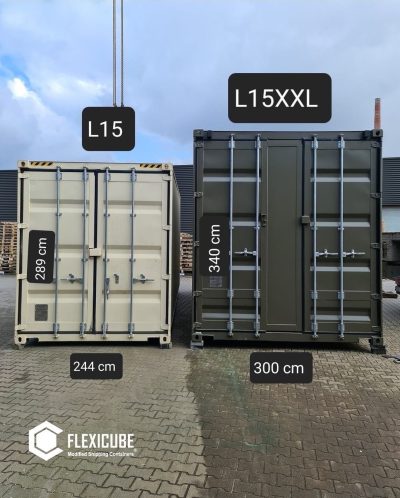
A High Cube container provides additional vertical interior space compared with a standard-height container.
This extra height can be particularly valuable when you want to:
- Store taller equipment
- Stack more materials
- Create additional overhead space
- Build a workshop
- Modify a container for another purpose
If vertical storage is important to your project, explore our High Cube Containers.
You can also read our supporting guide, High Cube Shipping Containers: Everything You Need to Know Before Buying (2026), for a more detailed explanation of High Cube containers.
Shipping Container Size Comparison
Container Size | Best For | Main Advantage |
|---|---|---|
10ft | Small storage | Compact footprint |
20ft | General storage | Excellent balance of space and mobility |
30ft | Medium-large storage | More capacity without going to 40ft |
40ft | Large storage | Significant storage capacity |
45ft | High-volume storage | Additional length |
High Cube | Tall or stackable items | Extra interior height |
The right choice ultimately depends on your available space, storage requirements, intended use and budget.
10ft vs. 20ft Shipping Containers
If you’re choosing between a 10ft and 20ft container, consider how much storage you expect to need.
A 10ft container is better when space is limited and your storage requirements are relatively modest.
A 20ft container is better when you need substantially more room for equipment, inventory or household belongings.
If you’re unsure, consider whether your storage needs are likely to increase in the future. Buying a slightly larger container initially can sometimes prevent the need for another container later.
20ft vs. 40ft Shipping Containers
The 20ft versus 40ft decision is one of the most common choices buyers face.
A 20ft container is generally easier to accommodate when property space is limited.
A 40ft container provides substantially more storage capacity and is better suited to larger commercial, industrial and storage requirements.
If you’re comparing these two sizes, our 20ft Shipping Containers: Everything You Need to Know Before Buying (2026) and 40ft Shipping Containers: The Complete Buyer’s Guide (2026) articles provide more detailed information about each option.
How to Choose the Right Shipping Container Size
Before purchasing, consider these five factors:
1. What Are You Storing?
Make a list of the equipment, inventory, materials or belongings you intend to store.
Don’t choose a container based only on the number of items. Consider their dimensions as well.
2. How Much Space Do You Have?
Measure the area where you intend to place the container.
Remember that you also need sufficient room for delivery and positioning.
3. Will Your Storage Needs Grow?
If you expect your inventory or equipment to increase, choosing a slightly larger container may make more sense.
4. Do You Need Extra Height?
If you’re storing tall equipment or stacking materials, consider a High Cube container rather than simply choosing a longer container.
5. What Is Your Budget?
Larger containers generally provide more storage but may also involve higher purchase and delivery considerations.
For a broader understanding of pricing, see our How Much Does a Shipping Container Cost in 2026? Complete Pricing Guide.
What Size Shipping Container Is Best for You?
There isn’t one container size that works for everyone.
A 10ft container is ideal when space is limited.
A 20ft container is a versatile choice for general storage and many residential or commercial applications.
A 30ft container provides an intermediate option for buyers who need more space than a 20ft container.
A 40ft container is better suited to large storage requirements.
A 45ft container is useful when additional length is important.
And a High Cube container is worth considering when vertical space matters.
The key is to match the container dimensions to your actual storage requirements rather than simply choosing the biggest available option.
Frequently Asked Questions
What is the most common shipping container size?
20ft and 40ft containers are among the most commonly used shipping container sizes for storage, transportation and commercial applications.
Is a 10ft shipping container big enough for storage?
Yes. A 10ft container can provide secure storage for tools, equipment, household belongings, business inventory and other items where a larger container isn’t necessary.
Is a 20ft or 40ft container better?
It depends on your storage requirements and available space. A 20ft container is more compact, while a 40ft container provides substantially more storage capacity.
What is the difference between a standard and High Cube container?
A High Cube container provides additional interior height compared with a standard-height container, making it useful for taller items and applications requiring more vertical space.
Are 30ft shipping containers available?
Yes, 30ft shipping containers are available, although they are generally less common than 20ft and 40ft containers.
Should I buy a 40ft container if I have extra space?
Not necessarily. The best container is the one that matches your actual requirements. A larger container can be useful, but you should also consider placement, access and your expected storage needs.
Final Thoughts
Understanding shipping container sizes makes it much easier to choose the right unit for your property, business or project.
From compact 10ft containers to spacious 45ft containers, each size serves a different purpose. The best option depends on what you’re storing, how much space you have available and whether your storage requirements are likely to change.
Before purchasing, compare the available sizes, consider your delivery area and make sure the container provides enough usable space for your intended application.
If you still need help deciding, start with How to Choose the Right Shipping Container for Your Needs (2026) and then compare the individual container categories available from Universal Container Depot.
Explore Shipping Containers to compare available options.
For more information about international shipping container standards, visit the International Maritime Organization (IMO)