Table of Contents
ToggleShipping Containers for Retail & Inventory Storage: A Complete Business Guide (2026)
Retail businesses often need additional space for inventory, seasonal merchandise, packaging, displays, equipment, and supplies.
A store may run out of warehouse space during busy periods, while an online retailer may need additional storage without immediately expanding into a larger commercial facility.
Shipping containers can provide an enclosed storage option for many of these situations.
The key is choosing a container that matches your inventory, available property, accessibility requirements, security needs, and expected growth.
This guide explains how retailers and other businesses can evaluate shipping containers for inventory and commercial storage.
Why Retailers Use Shipping Containers for Storage
Retail inventory can change significantly throughout the year.
Businesses may need additional space for:
- Overstock
- Seasonal merchandise
- Packaging materials
- Displays
- Furniture
- Equipment
- Spare inventory
- Business supplies
- E-commerce orders
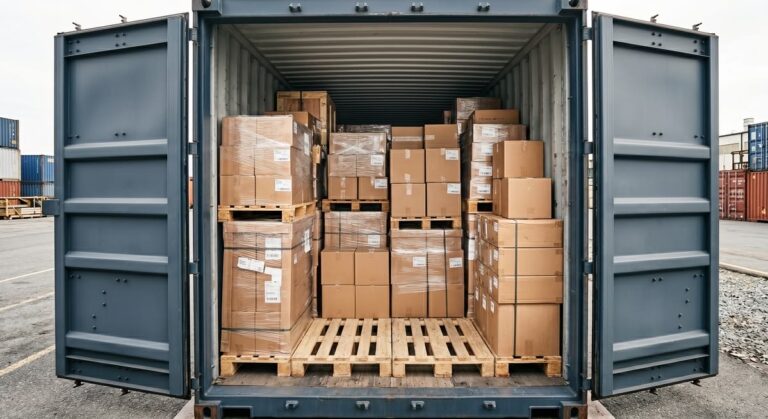
A shipping container can provide a dedicated storage area without requiring all inventory to remain inside the primary retail space.
For a broader introduction to purchasing containers, see Shipping Containers for Sale: The Complete Buyer’s Guide (2026).
1. Determine What You Need to Store
Start by creating an inventory list.
Consider:
- Number of boxes
- Product dimensions
- Pallet sizes
- Shelving requirements
- Fragile merchandise
- Oversized products
- Seasonal inventory
- Packaging materials
The dimensions and characteristics of your inventory will help determine the appropriate container.
Don’t estimate solely by the number of boxes. Consider how those boxes will actually be organized and accessed.
2. Choose the Right Container Size
Retailers can choose from several standard container lengths.
10ft Containers
A 10ft Container can be useful for smaller retailers that need additional inventory space without using a large area of their property.
20ft Containers
A 20ft Container can provide a practical balance between capacity and footprint for many businesses.
30ft Containers
A 30ft Container can provide additional storage when a 20ft container is insufficient.
40ft Containers
A 40ft Container offers substantially more storage capacity for businesses with larger inventory requirements.
45ft Containers
A 45ft Container can provide additional length for larger inventory operations where the property and delivery conditions allow it.
For a complete comparison, read 10ft vs. 20ft vs. 30ft vs. 40ft vs. 45ft Shipping Containers: Complete Comparison (2026).
3. Consider a High Cube Container
Retailers can often benefit from using vertical space.
A High Cube Container provides additional height compared with a standard-height container.
This can be useful for:
- Shelving
- Storage racks
- Stacked cartons
- Tall displays
- Inventory organization
Before choosing a High Cube, make sure the additional height works with the delivery route and installation location.
See Standard vs. High Cube Shipping Containers: What’s the Difference? (2026).
4. Plan Your Inventory Layout
A large container doesn’t automatically mean efficient storage.
Think about how employees will access inventory.
A useful layout can separate:
Frequently sold products
Near the doors for easier access.
Seasonal products
In a designated storage area.
Slow-moving inventory
Farther inside.
Packaging materials
In a dedicated section.
Shelving and storage racks can also help utilize vertical space.
5. Consider Seasonal Inventory
Retailers frequently experience seasonal changes in demand.
Examples include:
- Holiday merchandise
- Summer products
- Winter products
- Back-to-school inventory
- Promotional items
- Seasonal displays
A container can provide dedicated storage for merchandise that isn’t currently needed inside the store.
When the season changes, inventory can be rotated between the container and retail space.
6. Protect Your Inventory
Retail inventory can represent a significant investment.
Security should therefore be considered from the beginning.
Possible measures include:
- Secure locking hardware
- Lock protection
- Security cameras
- Exterior lighting
- Fencing
- Controlled property access
Read Shipping Container Security Tips: How to Protect Your Container (2026) for additional security considerations.
The container should be integrated into the business’s overall security system.
7. Consider Used Shipping Containers
Retail businesses may consider Used Shipping Containers when appearance is less important than practical storage.
For example, a container located behind a warehouse may primarily need to provide secure enclosed storage.
Before purchasing a used container, inspect:
- Roof
- Floor
- Doors
- Door seals
- Walls
- Rust
- Previous repairs
- Signs of water intrusion
The container’s condition should match the value and sensitivity of the inventory being stored.
8. Consider One-Trip Containers
A newer container may be worth considering when appearance matters.
For example, the container may be:
- Visible from the customer parking area
- Located beside a retail building
- Used as part of a customer-facing property
- Intended for a longer-term installation
Compare available conditions using One-Trip vs. Cargo Worthy Shipping Containers: What Buyers Should Know (2026).
9. Think About Temperature and Moisture
Not every product should be stored in the same environment.
Retailers should consider whether their products are sensitive to:
- Heat
- Cold
- Humidity
- Condensation
- Moisture
For temperature-sensitive inventory, a Refrigerated Container may be appropriate for certain applications.
Read Refrigerated Shipping Containers: The Complete Buyer’s Guide (2026) for more information.
For ordinary inventory, good ventilation, appropriate organization, and regular inspections can help maintain a suitable storage environment.
10. Consider Your Delivery Access
Before purchasing a container, make sure it can be delivered to your property.
Check:
- Driveway width
- Gate width
- Road access
- Turning space
- Overhead clearance
- Utility lines
- Trees
- Final placement area
A container that fits your property may still be difficult to deliver if access isn’t sufficient.
Read How Shipping Container Delivery Works: What Buyers Need to Know (2026).
11. Prepare the Installation Area
The container should be installed on a stable and appropriately prepared surface.
Potential approaches can include:
- Compacted gravel
- Concrete
- Properly designed support points
Good drainage should also be considered.
Avoid locations where water regularly collects.
For more information, see Shipping Container Foundations: Everything You Need to Know (2026).
12. Consider Pallet and Equipment Access
Retail businesses that receive palletized inventory should think about how products will enter and leave the container.
Consider:
- Door opening dimensions
- Pallet dimensions
- Loading equipment
- Aisle space
- Container placement
- Ground conditions
If inventory will frequently be moved with equipment, make sure the overall setup supports that workflow.
13. Think About Business Growth
Your inventory requirements may change.
Ask:
Will this container still provide enough storage if our business grows?
If inventory is expanding rapidly, selecting a container with some additional capacity may reduce the need for another storage solution later.
However, buying substantially more space than you can realistically use may waste valuable property space and budget.
14. Consider an Office or Retail Conversion
Some businesses use containers for more than inventory.
A container can potentially be converted into:
- Office space
- Retail space
- Temporary workspace
- Customer service area
- Storage office combination
Conversions can involve:
- Insulation
- Windows
- Doors
- Electrical systems
- Lighting
- HVAC
Any occupied or customer-facing conversion should comply with applicable local requirements.
See Container Homes & Offices: The Complete Buyer’s Guide (2026) for more information.
15. Keep Inventory Organized
Organization becomes increasingly important as inventory volume increases.
Consider using:
- Shelving
- Storage bins
- Labels
- Racks
- Hooks
- Inventory tracking
You can divide the container into different product categories.
For example:
Section A: New arrivals
Section B: Best-selling products
Section C: Seasonal products
Section D: Overstock
Section E: Packaging materials
This can make inventory retrieval faster and reduce unnecessary movement inside the container.
16. Maintain the Container
Retail storage containers should be inspected regularly.
Check for:
- Rust
- Door problems
- Damaged seals
- Roof issues
- Water intrusion
- Floor problems
- Drainage issues
Regular maintenance is particularly important when inventory is being stored for long periods.
Read Shipping Container Maintenance Guide: How to Keep Your Container in Great Condition (2026).
17. Calculate the Complete Storage Cost
The container purchase price isn’t necessarily your total project cost.
Consider:
- Container
- Delivery
- Site preparation
- Foundation
- Shelving
- Security
- Lighting
- Electrical modifications
- Maintenance
For a broader discussion of container pricing, read How Much Does a Shipping Container Cost in 2026? Complete Pricing Guide.
Which Container Is Suitable for Retail Storage?
Retail Requirement | Container to Consider |
|---|---|
Small inventory storage | |
General retail inventory | |
Growing inventory | |
Large inventory | |
High-volume storage | |
Vertical shelving | |
Temperature-sensitive products | |
Cost-conscious storage | |
Office or workspace |
These are general starting points. The actual choice should be based on inventory dimensions, storage conditions, property limitations, and business operations.
Retail Inventory Storage Checklist
Before purchasing, confirm:
☐ We know what products will be stored
☐ We have estimated inventory volume
☐ We have measured large products
☐ We have considered future growth
☐ We selected the appropriate size
☐ We considered High Cube options
☐ We evaluated container condition
☐ We planned shelving and organization
☐ We considered security
☐ We checked delivery access
☐ We prepared the installation area
☐ We considered moisture and ventilation
☐ We calculated the complete project cost
☐ We reviewed applicable local requirements
Frequently Asked Questions
Can shipping containers be used for retail inventory?
Yes. Shipping containers can provide enclosed storage for many types of retail inventory, provided the products are suitable for the storage environment.
What size container is best for retail inventory?
It depends on the amount and dimensions of inventory. 20ft and 40ft containers can provide substantial storage, while 10ft, 30ft, and 45ft options offer alternatives for different business requirements.
Is a High Cube container good for inventory?
It can be useful when shelving and vertical storage are important. Always check the actual interior dimensions and available clearance for your property.
Can a container be used for seasonal retail inventory?
Yes. A container can provide separate storage for seasonal merchandise, displays, packaging, and other inventory that isn’t currently needed in the primary retail space.
Should retailers buy used or new containers?
The appropriate condition depends on the business’s budget, appearance requirements, intended use, and the condition of the inventory being stored.
Final Thoughts
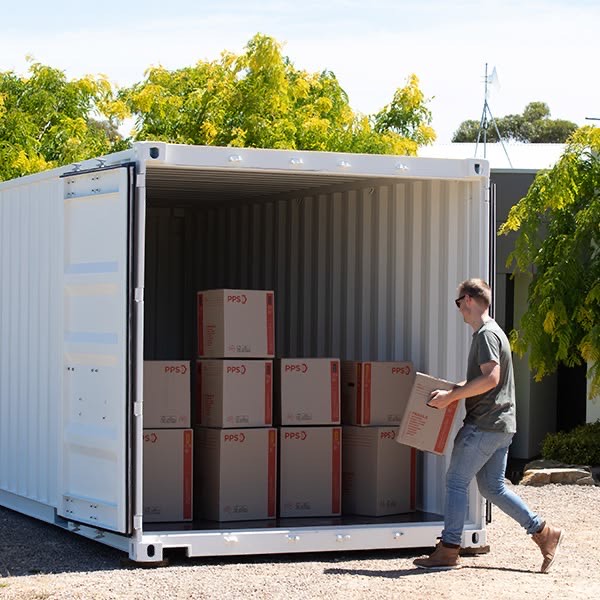
Shipping containers can give retailers and other businesses additional space for inventory without requiring all products to remain inside the main retail or warehouse building.
The right choice starts with your inventory volume, product dimensions, accessibility requirements, storage conditions, security needs, and available property space.
From there, compare container sizes, conditions, High Cube options, specialized containers, delivery requirements, and foundation needs.
Explore 10ft Containers, 20ft Containers, 30ft Containers, 40ft Containers, 45ft Containers, High Cube Containers, and Used Shipping Containers based on your business requirements.
When you’re ready to find the right container for your needs, explore Shipping Containers and compare the available sizes and configurations.
For more information about international shipping container standards, visit the International Maritime Organization (IMO)