Table of Contents
ToggleShipping Containers for Small Businesses: Affordable Storage Solutions (2026)
Small businesses often need more space as they grow.
Inventory increases, equipment accumulates, supplies take up valuable room, and seasonal merchandise can quickly fill an existing workspace.
Moving into a larger commercial property isn’t always the first solution a growing business needs.
A shipping container can provide an additional enclosed storage area for many small-business applications.
From inventory and tools to equipment and supplies, the right container can give a business more usable space while keeping storage separate from its primary workspace.
However, choosing a container requires careful consideration of size, condition, security, delivery access, site preparation, and future business needs.
Why Small Businesses Use Shipping Containers
Small businesses can use containers for many different purposes, including:
- Inventory storage
- Equipment storage
- Tool storage
- Seasonal merchandise
- Business supplies
- Packaging materials
- Spare parts
- Agricultural supplies
- Workshop storage
- Temporary office space
A container can also help separate storage from the main operating area, leaving more room for employees, customers, or day-to-day business activities.
If you’re new to buying containers, start with Shipping Containers for Sale: The Complete Buyer’s Guide (2026).
1. Determine Your Storage Requirements
Before selecting a container, make a list of what you need to store.
Consider:
- Number of boxes
- Equipment dimensions
- Tools
- Inventory
- Shelving
- Pallets
- Seasonal products
- Packaging materials
Think about both volume and accessibility.
A container that technically holds everything may still be too small if employees cannot move around inside it or retrieve products efficiently.
2. Choose the Right Container Size
Small businesses don’t necessarily need the largest container.
10ft Containers
A 10ft Container can be useful when storage requirements are relatively small or property space is limited.
It can work well for:
- Tools
- Small inventory
- Supplies
- Equipment
20ft Containers
A 20ft Container provides substantially more storage while maintaining a manageable footprint.
It can be useful for growing businesses that need additional inventory or equipment storage.
30ft Containers
A 30ft Container offers an intermediate option for businesses that have outgrown a 20ft unit.
40ft Containers
A 40ft Container can provide substantial storage for businesses with larger inventories or equipment requirements.
45ft Containers
A 45ft Container can provide additional length for businesses with significant storage needs and enough property space.
For a full comparison, see 10ft vs. 20ft vs. 30ft vs. 40ft vs. 45ft Shipping Containers: Complete Comparison (2026).
3. Consider a High Cube Container
If your business needs to maximize vertical storage, consider a High Cube Container.
The additional height can be useful for:
- Shelving
- Storage racks
- Stacked boxes
- Tall equipment
- Business supplies
However, check overhead clearance before choosing a High Cube.
Read Standard vs. High Cube Shipping Containers: What’s the Difference? (2026).
4. Think About Future Growth
Don’t choose a container based only on today’s inventory.
Consider how quickly your business is growing.
If inventory is increasing every few months, purchasing a container with some additional capacity may help prevent another storage problem later.
At the same time, buying far more space than you need can unnecessarily consume property space and budget.
The goal is to choose a practical balance.
5. Consider Used Shipping Containers
For many small businesses, budget is an important consideration.
A Used Shipping Container may provide a practical storage option when appearance isn’t the primary concern.
Used containers should still be carefully inspected.
Check:
- Doors
- Door seals
- Roof
- Floor
- Walls
- Rust
- Previous repairs
- Signs of water intrusion
The condition should be appropriate for what you intend to store.
See Shipping Container Grades Explained: What Buyers Need to Know (2026).
6. Consider One-Trip Containers
A newer container may make sense when the unit will be highly visible or when the business wants a newer-looking storage solution.
For example, a container positioned beside a customer-facing property may benefit from a cleaner appearance.
Read One-Trip vs. Cargo Worthy Shipping Containers: What Buyers Should Know (2026) when comparing container conditions.
7. Use a Container for Business Inventory
Small retailers and online businesses often need additional inventory space.
A container can potentially store:
- Overstock
- Seasonal products
- Packaging
- Displays
- Product supplies
- Spare inventory
Organize products using shelving, bins, labels, and designated storage zones.
Our Shipping Containers for Retail & Inventory Storage: A Complete Business Guide (2026) provides additional guidance.
8. Use a Container for Tools and Equipment
Contractors, tradespeople, landscapers, mechanics, and service businesses may need secure storage for tools and equipment.
A container can provide a dedicated location for:
- Power tools
- Hand tools
- Spare parts
- Equipment
- Maintenance supplies
Keeping equipment in one organized location can also make it easier to manage inventory.
9. Prioritize Security
Small businesses can have significant amounts of money invested in inventory and equipment.
Consider combining the container with:
- High-security locks
- Lock protection
- Security cameras
- Exterior lighting
- Fencing
- Controlled access
See Shipping Container Security Tips: How to Protect Your Container (2026) for additional security considerations.
Remember that container security should complement the overall security of the property.
10. Check Delivery Access
Before purchasing a container, determine whether the delivery equipment can access your property.
Check:
- Driveway width
- Gate width
- Turning space
- Overhead clearance
- Utility lines
- Trees
- Road conditions
- Final placement area
This is particularly important for small businesses operating from properties with limited access.
Read How Shipping Container Delivery Works: What Buyers Need to Know (2026).
11. Prepare the Installation Area
A container should be placed on a stable, appropriately prepared surface.
Depending on the property and project, possible approaches include:
- Compacted gravel
- Concrete
- Properly designed support points
Drainage should also be considered.
Avoid locations where water consistently collects.
Read Shipping Container Foundations: Everything You Need to Know (2026) before installation.
12. Think About Accessibility
A container should be convenient enough for employees to use.
Think about:
- How often items are accessed
- Where frequently used products are placed
- Whether shelving is required
- Whether equipment needs to enter
- Whether pallets will be stored
- How products will be loaded and unloaded
Place frequently used items closer to the doors and less frequently accessed items farther inside.
13. Consider Refrigerated Storage
Some small businesses may work with products requiring temperature-controlled storage.
A Refrigerated Container can be considered for appropriate temperature-sensitive applications.
Potential users can include certain food businesses and other operations that require controlled-temperature storage.
However, refrigerated containers require appropriate power, operating conditions, and temperature management.
Read Refrigerated Shipping Containers: The Complete Buyer’s Guide (2026).
14. Consider a Container Office or Workspace
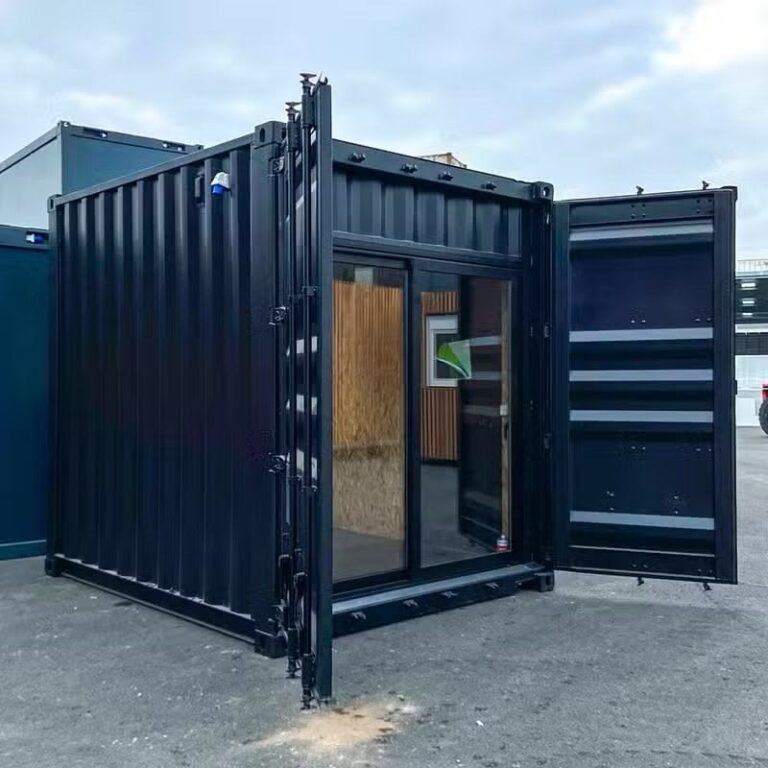
A container can potentially be converted into an office or workspace.
For a small business, this could provide space for:
- Administration
- Customer service
- Inventory management
- On-site staff
- Temporary operations
Conversions may require insulation, electrical systems, windows, doors, lighting, HVAC, and compliance with applicable requirements.
See Container Homes & Offices: The Complete Buyer’s Guide (2026) for more information.
15. Don’t Forget Maintenance
Once installed, the container should be inspected periodically.
Look for:
- Rust
- Roof problems
- Door problems
- Damaged seals
- Floor issues
- Water intrusion
- Drainage problems
Regular maintenance can help keep the container suitable for long-term business storage.
Read Shipping Container Maintenance Guide: How to Keep Your Container in Great Condition (2026).
16. Consider the Total Cost
The container purchase price is only one part of the project.
Your total budget may include:
- Container
- Delivery
- Site preparation
- Foundation
- Shelving
- Security
- Electrical work
- Modifications
- Maintenance
Before purchasing, calculate the complete cost.
See How Much Does a Shipping Container Cost in 2026? Complete Pricing Guide.
Best Container Options for Small Businesses
Business Need | Container to Consider |
|---|---|
Small storage requirements | |
General business storage | |
Growing storage needs | |
Large inventory | |
Significant storage requirements | |
Vertical storage | |
Temperature-sensitive goods | |
Budget-conscious storage | |
Office/workspace conversion |
These are general starting points. The appropriate choice depends on the business’s actual storage requirements and property.
Small Business Shipping Container Checklist
Before purchasing, confirm:
☐ We know what will be stored
☐ We have estimated the required space
☐ We have measured large equipment
☐ We have considered future growth
☐ We selected the appropriate size
☐ We considered High Cube options
☐ We evaluated the container’s condition
☐ We planned the interior organization
☐ We considered security
☐ We checked delivery access
☐ We prepared the installation area
☐ We planned the foundation
☐ We considered ventilation and moisture
☐ We calculated the complete project cost
☐ We reviewed applicable local requirements
Frequently Asked Questions
Are shipping containers good for small businesses?
They can provide useful additional storage for inventory, equipment, tools, supplies, and other appropriate materials.
What is the best shipping container size for a small business?
It depends on the business. A 10ft container may work for limited storage, while 20ft, 30ft, or 40ft containers can accommodate larger requirements.
Can a small business use a used shipping container?
Yes. A used container can be considered when its condition is appropriate for the intended storage application.
Can a shipping container be used as a small business office?
A container can potentially be converted into an office or workspace, subject to appropriate design and local requirements.
Can shipping containers store retail inventory?
Yes. They can provide additional enclosed storage for appropriate retail inventory, seasonal merchandise, packaging, and supplies.
Final Thoughts
Shipping containers can give small businesses additional storage without immediately requiring a larger commercial building.
The right choice depends on what you need to store, how much space you need, how often you access your inventory, your property limitations, and your future business requirements.
For smaller storage needs, consider 10ft Containers. Growing businesses may find 20ft or 30ft Containers more suitable, while businesses with larger storage requirements can consider 40ft or 45ft Containers.
If vertical storage is important, explore High Cube Containers. Businesses looking for a more economical storage solution can also consider Used Shipping Containers.
When you’re ready to find the right container for your needs, explore Shipping Containers and compare the available sizes and configurations.
For more information about international shipping container standards, visit the International Maritime Organization (IMO)