Table of Contents
ToggleShipping Containers for Fleet Management: Vehicle Parts, Tools & Maintenance Storage Guide (2026)
Managing a fleet of vehicles requires more than keeping trucks, vans, service vehicles, or company cars on the road. Businesses also need an organized way to store replacement parts, maintenance tools, tires, safety equipment, lubricants, and other essential supplies.
Without a dedicated storage system, fleet managers can struggle with misplaced tools, disorganized inventory, limited warehouse space, and delays when vehicles need maintenance.
Shipping containers offer a practical storage option for fleet operators who need additional space at a depot, maintenance yard, construction site, distribution facility, or commercial property. Depending on the container’s size, condition, configuration, and location, it can serve as a dedicated storage area for frequently used fleet supplies.
In this guide, we’ll explain how businesses can use shipping containers for fleet management, compare container sizes, explore organization and security considerations, and identify the factors to evaluate before purchasing.
If you’re still comparing your options, start with our Shipping Containers for Sale: The Complete Buyer’s Guide (2026) for an overview of the purchasing process.
1. Why Fleet Management Businesses Use Shipping Containers
Fleet operations depend on having the right equipment and replacement parts available when needed. A missing tire, tool, filter, or spare component can delay maintenance and affect vehicle availability.
A shipping container can provide a separate storage space for items that would otherwise occupy valuable workshop or warehouse space.
Centralized Storage for Fleet Supplies
Fleet managers may need to store:
- Replacement filters and selected spare parts
- Tires and wheels
- Hand tools and maintenance equipment
- Safety vests, cones, and warning signs
- Vehicle cleaning supplies
- Non-hazardous consumables
- Workwear and protective equipment
- Selected vehicle accessories
- Inventory records and maintenance supplies
Keeping these items in one designated area can make stock easier to organize and locate.
The appropriate storage arrangement depends on the business’s inventory, the container’s capacity, and the conditions required for each item.
Reduce Workshop Clutter
When frequently used supplies occupy workbenches, maintenance bays, and walkways, technicians may have less room to work efficiently.
A container positioned near an appropriate service area can hold selected supplies, leaving the main workshop available for vehicle inspections, repairs, and routine maintenance.
For businesses comparing different container capacities, Shipping Container Sizes Explained can help identify the options worth considering.
Support Multiple Fleet Locations
Businesses operating several depots or service locations may need additional storage at individual sites.
Depending on access, transportation arrangements, and local requirements, containers can provide separate storage areas for each location.
For example, a regional maintenance depot might use one container for tires and accessories and another for general tools and equipment.
Before establishing separate storage areas, determine whether each location has enough space for the container, delivery vehicle, and any equipment needed to load or unload supplies.
2. What Can You Store in a Fleet Management Container?
The best storage plan starts with an inventory of the items your fleet operation uses regularly.
Not every item is suitable for an ordinary shipping container. Temperature-sensitive products, hazardous substances, and equipment requiring special environmental conditions may need dedicated storage solutions.
Vehicle Parts and Accessories
A container can be useful for storing compatible vehicle components and accessories, including selected filters, hoses, belts, lights, mirrors, and other replacement parts.
Use labeled shelves, compartment organizers, and inventory bins to prevent small components from becoming mixed together.
For expensive parts, maintain an inventory record showing the quantity, storage location, and date received.
Tires and Wheels
Fleet operators may keep spare tires and wheels available for scheduled replacements or unexpected maintenance.
Before purchasing a container for tire storage, consider the number of tires, their dimensions, the shelving arrangement, and the space needed to move them safely.
Tires should be stored according to the manufacturer’s recommendations. Avoid arrangements that could cause unstable stacks, damage, or unsafe lifting.
Tools and Maintenance Equipment
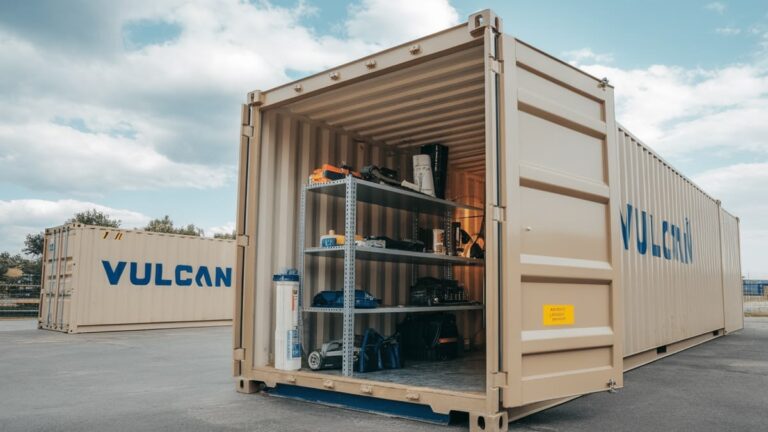
Containers can accommodate many types of hand tools, tool cabinets, portable equipment, and selected maintenance supplies.
Heavy equipment should be positioned with attention to the container’s floor condition, loading limits, and weight distribution.
For businesses that need substantial room for equipment, Shipping Containers for Equipment Storage: A Complete Guide for Businesses (2026) offers additional guidance on planning a suitable storage setup.
Safety Equipment and Workwear
Fleet operators may also store certain non-hazardous items, such as:
- High-visibility clothing
- Safety cones
- Warning triangles
- Protective gloves
- Hard hats
- Basic emergency supplies
- Rain gear and uniforms
Keep emergency equipment that must be immediately accessible in a location that employees can reach quickly. A storage container should not become an obstacle to emergency access.
Lubricants, Chemicals, and Other Controlled Materials
Do not assume that an ordinary shipping container is suitable for storing every fluid or chemical used in vehicle maintenance.
Fuels, oils, solvents, batteries, refrigerants, and hazardous substances may have specific ventilation, fire protection, spill containment, temperature, separation, and regulatory requirements.
Check the applicable safety data sheets, manufacturer instructions, fire codes, environmental regulations, and local requirements before deciding how such materials should be stored. Use an appropriately designed storage system when necessary.
3. Choosing the Right Shipping Container Size for Fleet Management
Container size influences how much inventory you can store, how easily staff can move around inside, and whether the container will fit your property.
The following options are useful starting points, but the right choice depends on the actual dimensions and specifications of the unit.
Container size | Potential fleet management use | Best suited for |
|---|---|---|
10ft container | Small tool inventory and selected spare parts | Small fleets or limited storage areas |
20ft container | Tires, shelving, tools, and routine supplies | Small to medium fleet operations |
30ft container | Larger inventory and equipment storage | Growing fleets with more supplies |
40ft container | High-volume parts, tires, and maintenance inventory | Large depots and established fleet operations |
45ft container | Additional storage capacity where site access permits | Larger operations requiring substantial storage |
Explore 10ft Containers, 20ft Containers, 30ft Containers, 40ft Containers, and 45ft Containers to compare available options.
Is a 10ft Container Enough?
A 10ft container may be suitable for a small operation that needs a dedicated place for hand tools, selected spare parts, and safety supplies.
Its smaller footprint can be useful where property space is limited.
However, shelving, cabinets, and bulky items reduce usable floor space. Measure the largest items and plan how staff will access them before deciding whether a compact unit is sufficient.
When Should You Choose a 20ft Container?
A 20ft container can offer a useful balance between storage capacity and footprint.
It may suit a fleet that needs space for organized parts inventory, selected tires, maintenance supplies, and tool cabinets without requiring a large storage unit.
Review the 20ft vs. 40ft Shipping Containers comparison if you’re deciding between a standard mid-sized unit and a larger container.
When Is a 40ft Container the Better Option?
A 40ft container may be more suitable for operations with substantial parts inventories, multiple storage zones, or frequent replenishment deliveries.
Its additional length can support separate areas for different categories of inventory, provided the layout maintains safe access and adequate space for handling equipment.
Before ordering, verify the container’s internal dimensions, door opening, floor condition, payload capacity, and the space required for your shelving system.
Should You Consider a High Cube Container?
A high cube container offers additional internal height compared with a standard-height container of a comparable length.
That additional height may help when planning suitable vertical storage, provided the shelving and stored items can be safely accommodated.
Review Standard vs. High Cube Shipping Containers (2026) before choosing between the two configurations.
Remember that extra height does not automatically mean greater floor space or a higher permitted payload.
4. Organizing a Fleet Storage Container Efficiently
Purchasing a container is only the first step. A practical organization system makes it easier to identify parts, track stock, and keep supplies accessible.
Create Dedicated Storage Zones
Divide the available space into zones based on how the fleet operates.
For example:
Storage zone | Items |
|---|---|
Parts inventory | Filters, belts, hoses, and selected replacement parts |
Tire storage | Tires and wheels arranged safely |
Tool storage | Tool cabinets and hand tools |
Safety supplies | Vests, cones, gloves, and protective equipment |
Consumables | Approved, compatible maintenance consumables |
Receiving area | Newly delivered stock awaiting inspection |
The number and size of zones will depend on the container’s dimensions and the inventory volume.
Avoid placing frequently used items behind heavy equipment or large stacks of supplies.
Install Suitable Shelving
Commercial shelving can help maximize usable space and separate small parts from bulky items.
When selecting shelving, consider:
- The weight rating of each shelf
- The combined load of the shelving system
- Safe anchoring and stability
- Access to stored items
- The container’s floor condition
- Clear routes for moving supplies
Do not overload shelves or attach equipment without confirming that the proposed installation is appropriate for the container’s structure.
Use Labels and Inventory Records
Label shelves, bins, and cabinets clearly.
A simple inventory system should record each item’s name, stock quantity, storage location, and reorder threshold.
For larger fleets, barcode labels or inventory management software can help employees track parts and identify low-stock items.
Maintain Clear Access Routes
A container filled from floor to ceiling may hold substantial inventory but become difficult to use.
Keep access routes clear, store heavy items in suitable low positions, and make sure employees can retrieve supplies without climbing unstable stacks.
If workers regularly enter the container, consider lighting, ventilation, safe handling procedures, and the risks associated with working in confined spaces.
5. New vs. Used Containers for Fleet Operations
Container condition matters because fleet storage may involve frequent access, valuable equipment, and long-term outdoor placement.
The right purchase depends on the intended use, budget, expected service life, and condition of the specific unit.
One-Trip or New Containers
One-trip containers are generally manufactured overseas and used for a limited number of journeys before being sold into the secondary market.
They may be appealing to fleet operators who want a relatively new unit for a long-term storage location.
Inspect the actual container rather than relying on its label alone. Check the doors, locking mechanisms, roof, floor, walls, and any signs of damage.
Explore 10ft Containers, 20ft Containers, or 40ft Containers if you want to compare available sizes.
Used Shipping Containers
Used containers may be appropriate when the primary goal is to create additional storage at a fleet depot while controlling upfront costs.
Their condition can vary considerably, so request clear information about the specific unit.
Check for:
- Corrosion and structural damage
- Roof condition and evidence of water entry
- Door operation and seal condition
- Floor damage or contamination
- Locking bar and handle operation
- Previous repairs and modifications
Our Used Shipping Containers for Sale: The Complete Buyer’s Guide (2026) explains additional considerations when evaluating used units.
Understanding Container Grades
Container descriptions can help you narrow down options, but terminology should be verified with the seller.
For example, cargo-worthy condition generally relates to suitability for cargo transport, while wind-and-watertight condition generally focuses on protection against wind and water intrusion under the relevant inspection criteria. Neither label alone establishes that a container is ideal for every storage application.
Read Shipping Container Grades Explained: What Buyers Need to Know before making a decision.
For a deeper comparison, see One-Trip vs. Cargo Worthy Shipping Containers (2026).
6. Protecting Fleet Parts and Tools From Moisture
Moisture can damage metal tools, electrical components, packaging, and certain spare parts.
Although containers are designed for cargo transport, their interior conditions can change with outdoor temperature, humidity, ventilation, and the temperature of stored items.
Inspect the Roof, Doors, and Seals
Before loading inventory, examine the roof, door seals, corners, and walls for signs of damage or water intrusion.
Open and close the doors to check that they operate properly.
Do not assume a container is watertight simply because it is described as new or used. Verify its actual condition.
Control Condensation
Condensation can occur when humid air contacts cooler interior surfaces.
Depending on the climate and contents, useful measures may include:
- Keeping stored goods off the floor where appropriate
- Using suitable moisture-control products
- Improving ventilation where the application permits
- Monitoring humidity
- Using protective packaging for sensitive components
- Avoiding the storage of wet equipment alongside dry inventory
Any ventilation modifications should be suitable for the container’s intended use and should not compromise security or weather protection.
Protect Sensitive Components
Some electronic parts, diagnostic equipment, batteries, and specialized vehicle components require controlled storage conditions.
Check the manufacturer’s storage requirements before placing them in a standard container.
If temperature or humidity must remain within a narrow range, consider a properly designed climate-controlled storage solution instead of assuming that a standard container will provide those conditions.
For broader guidance, read Shipping Container Maintenance Guide: How to Keep Your Container in Great Condition (2026).
7. Security Considerations for Fleet Storage
Fleet storage containers may hold expensive tools, replacement parts, and equipment. Security should therefore be considered before installation.
Choose an Appropriate Locking System
Inspect the container’s door handles, locking bars, hasps, and other locking points.
A suitable heavy-duty lock can be one part of a broader security plan, but no locking system makes a container completely theft-proof.
Depending on the site’s risk level, you may also consider a lockbox, monitored cameras, exterior lighting, and an alarm system.
Position the Container Carefully
Where practical, position the container in a visible, well-managed area with controlled access.
Consider how employees, delivery vehicles, maintenance contractors, and security personnel will reach it.
Avoid blocking emergency exits, fire lanes, drainage routes, or access to other facilities.
Control Inventory Access
Limit access to authorized employees and maintain a record of high-value tools and parts.
For valuable inventory, use locked internal cabinets or secure toolboxes inside the container.
Read Shipping Container Security Tips: How to Protect Your Container (2026) for additional practical measures.
8. Preparing Your Fleet Depot for Container Delivery
Before ordering, confirm that your property can accommodate the container and the equipment needed to deliver it.
Check the Delivery Route
Measure the access road, gate openings, turning areas, overhead clearance, and any narrow passages.
The delivery vehicle may need more room than the container itself.
Discuss the access conditions with the supplier before scheduling delivery.
Prepare a Suitable Foundation
Containers should be placed on an appropriately prepared, stable surface that supports their weight and helps prevent uneven settlement.
Depending on site conditions and the container’s intended use, possible support arrangements may include properly designed concrete pads, compacted aggregate, or suitable foundation blocks.
The right choice depends on the soil, drainage, loading conditions, local requirements, and the specific container.
Avoid placing a loaded container on unstable ground or improvised supports that could shift.
See Shipping Container Foundations: Everything You Need to Know for more guidance.
Consider Drainage and Ground Conditions
Water pooling around the container can contribute to site problems and make access difficult.
Plan drainage so that rainwater does not accumulate around the foundation or obstruct doors.
If the container will be installed permanently or used for a specialized purpose, check applicable building, zoning, fire, and permitting requirements.
Confirm Delivery Details in Advance
Before finalizing the order, confirm:
- Container dimensions and condition
- Delivery cost and included services
- Site access requirements
- Placement limitations
- Whether unloading equipment is included
- Whether permits or site preparation are required
- Expected delivery timeframe
Our How Shipping Container Delivery Works: What Buyers Need to Know (2026) explains the delivery process, while How to Prepare Your Property for Shipping Container Delivery (2026) covers site preparation.
9. Planning for Fleet Growth
Fleet storage requirements often change as a company adds vehicles, hires technicians, or expands into additional service areas.
A container that works today may eventually become too small for the inventory.
Before purchasing, estimate your current stock volume and expected growth over the next few years.
Ask these questions:
- How many vehicles does the business currently operate?
- How many vehicles might be added?
- Which parts are used most frequently?
- How much tire and wheel inventory must be stored?
- Will additional maintenance equipment be introduced?
- Will the container also store safety equipment or workwear?
- Is there enough property space for a larger container later?
If future demand is uncertain, compare the total cost and practicality of one larger container against multiple smaller units.
For a broader overview of possible applications, see Best Uses for Shipping Containers.
10. Other Container Options for Specialized Fleet Needs
A standard dry container may be sufficient for general fleet inventory, but specialized operations can have different requirements.
High Cube Containers
High cube containers can be worth considering when additional vertical space is useful for suitable shelving or taller equipment.
Explore High Cube Containers and confirm the actual dimensions before designing the storage layout.
Refrigerated Containers
Refrigerated containers are designed for temperature-controlled transport and storage applications, but suitability depends on the specific equipment, operating conditions, and temperature requirements.
They are not automatically the right choice for ordinary vehicle parts storage. Assess whether controlled temperature is genuinely necessary and whether the operating costs and installation requirements make sense.
Learn more in Refrigerated Shipping Containers: The Complete Buyer’s Guide (2026).
Open Top and Flat Rack Containers
Open top and flat rack containers are designed for particular cargo-loading and transport needs. Their configurations may not provide the same enclosed storage characteristics as a standard dry container.
For ordinary fleet parts and tool storage, an enclosed container will often be the more straightforward option. Specialized configurations should be considered only when their design addresses a specific operational requirement.
See Open Top Shipping Containers: The Complete Buyer’s Guide (2026) and Flat Rack Shipping Containers: The Complete Buyer’s Guide (2026) for more information.
11. Fleet Management Container Selection Checklist
Use this checklist before purchasing a container for your fleet operation.
Storage Requirements
- ☐ List the parts, tools, tires, and supplies to be stored.
- ☐ Estimate current inventory volume.
- ☐ Allow enough space for shelves and safe access.
- ☐ Identify items that require special environmental conditions.
- ☐ Separate hazardous or regulated materials where required.
Container Specifications
- ☐ Select a suitable size.
- ☐ Verify actual internal dimensions and door openings.
- ☐ Check the floor, roof, walls, doors, and locking mechanisms.
- ☐ Confirm the container’s condition and any modifications.
- ☐ Check payload and loading requirements.
Site Preparation
- ☐ Measure the delivery route and access points.
- ☐ Confirm sufficient space for unloading and placement.
- ☐ Prepare an appropriate foundation.
- ☐ Check drainage and ground conditions.
- ☐ Review local permits and property restrictions.
Security and Organization
- ☐ Select an appropriate locking system.
- ☐ Plan shelving and storage zones.
- ☐ Establish an inventory tracking process.
- ☐ Keep access routes clear.
- ☐ Establish an inspection and maintenance schedule.
Purchasing and Delivery
- ☐ Compare suitable container options.
- ☐ Confirm the price and delivery arrangements.
- ☐ Ask about available inspection information.
- ☐ Confirm the expected delivery timeframe.
- ☐ Review the seller’s terms and any applicable warranty.
For an additional pre-purchase resource, use our Shipping Container Buying Checklist: What to Check Before You Buy (2026).
12. Frequently Asked Questions
Can a shipping container be used for fleet maintenance storage?
Yes. A shipping container can be used to store suitable fleet maintenance tools, replacement parts, tires, safety equipment, and other supplies. It is generally best used as a storage area rather than as a vehicle repair workshop unless the container and site have been appropriately designed and approved for that purpose.
What size shipping container is best for fleet management?
The best size depends on the fleet’s inventory, the size of the stored equipment, and available property space. A 10ft container may suit a small tool inventory, while 20ft and 40ft units can provide more room for parts, tires, and shelving. Larger options may be appropriate for high-volume operations.
Can fleet operators store tires in shipping containers?
Yes, provided the storage arrangement is appropriate for the tires and the container’s capacity. Tires should be arranged safely and stored according to the manufacturer’s recommendations. Consider temperature, humidity, access, and the space required to handle them.
Are used shipping containers suitable for storing vehicle parts?
They can be. However, inspect the roof, doors, seals, floor, and overall structural condition before purchasing. Sensitive or expensive parts may also require additional packaging or controlled storage conditions.
Can tools and spare parts rust inside a shipping container?
Yes. Moisture and condensation can contribute to corrosion, even inside an enclosed container. Inspect the unit, monitor moisture, use suitable packaging and storage methods, and consider appropriate ventilation or moisture-control measures.
Can hazardous maintenance supplies be stored in a container?
Some materials may require specially designed storage arrangements. Fuels, solvents, batteries, oils, and other hazardous substances can have specific ventilation, fire safety, spill containment, separation, and legal requirements. Check the applicable regulations and safety data sheets before storing them.
How can we improve security?
Use a suitable lock, inspect the door hardware, control access, and consider site lighting, cameras, alarms, and secure internal cabinets. The appropriate measures depend on the value of the inventory and the security risks at the location.
Do we need a foundation for a fleet storage container?
A suitable, stable support surface is important. The appropriate foundation depends on ground conditions, container loading, drainage, and intended use. Consult a qualified local professional if site conditions or installation requirements are uncertain.
Should we choose a standard or high cube container?
Choose based on the stored items and planned layout. A high cube container provides additional height, which can be helpful for some shelving arrangements, but it does not automatically provide more floor area or a higher permitted payload.
Where can we find shipping containers for fleet storage?
You can explore available sizes and configurations through the Universal Container Depot website. Compare specifications, condition, delivery requirements, and intended use before selecting a unit.
Conclusion: Choose a Container That Supports Your Fleet Operations
A well-planned shipping container can give fleet managers additional space for tools, tires, replacement parts, safety equipment, and other supplies. The key is to choose a suitable size, verify the unit’s condition, organize the inventory, and prepare the site before delivery.
Start by identifying what your fleet needs to store, how frequently employees will access those items, and whether any products require special environmental or safety conditions.
Then compare available 20ft Containers, 40ft Containers, and other suitable options to find a configuration that fits your operation.
Before ordering, review the Shipping Containers for Sale: The Complete Buyer’s Guide (2026) and How to Choose the Right Shipping Container for Your Needs (2026) to help guide your decision.
When you’re ready to find the right container for your needs, explore Shipping Containers and compare the available sizes and configurations.
For more information about international shipping container standards, visit the International Maritime Organization (IMO)